The Unrecognizable Life
On Astrology and the Unraveling of the American Briefing

I spent 21 years inside the FBI, defending a myth that eventually dissolved. Now, as a 6,000-year astrological cycle meets a collapsing national narrative, I am learning to trade the weight of institutional authority for the somatic truth of the body. This is a story about letting go, the shadow of our institutions, and finding a new compass when the structures we once trusted are revealed to be doing harm.
The Nauseous Memory
I had a memory today that landed in my body before it found words.
I was an FBI supervisor, in a secure room, staring at intelligence only our unit could see. It was the kind of material you cannot discuss and already heavy with accusation when it arrived. What it pointed to felt urgent enough we knew it couldn’t wait.
We alerted the chain of command, phones rang, and emails piled up. Then we notified our partner agencies. A small group of us stayed late—really late—long after the Hoover Building should have emptied. We spread the material out, sorted it, cross-checked it, debated it. The goal was clear: understand it well enough to brief Congress. That was how serious it felt.
I remember the hours—how the work mattered, how we moved on adrenaline and purpose, convinced this was what defending the country looked like.
Looking back, my relationship to that moment is more complicated than I expected. What arises now is a mix of grief and a physical unease I didn’t feel while I was still inside the work.
That feeling comes from a quiet obedience we carried then. The belief that if you worked hard enough, stayed late enough, cared deeply enough, the system would metabolize truth with integrity. Our patriarchal vow to defend the United States and its ideals was, in hindsight, heartbreakingly naive.
Sitting with that memory now, against the backdrop of public revelations—power, wealth, elite impunity, Epstein, and the current state of the FBI—my stomach turns. The contrast is too sharp. The faith we once relied on—the faith the system quietly counted on us having—feels exposed.
It was not betrayal, but rather a gradual disillusionment that unfolded silently over time, as my body learned what my mind hadn’t fully articulated.
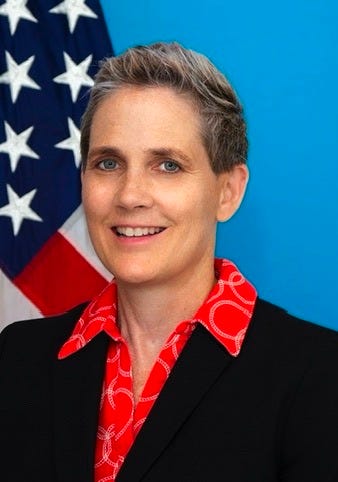
The Unrecognizable Life
What makes this moment stranger is that it isn’t accidental.
When I was thirty-five, still early in my career, a coworker at FBI headquarters gave me the name of an astrologer. Spirituality had long been part of my world: Buddhism, Insight Meditation, silent retreats. I’ve always lived in contrasts—West Point with a philosophy major, a cadet summer reading Thoreau’s Walden and exploring group dynamics on the Appalachian Trail with a full bird Colonel and Army Ranger, the head of the Philosophy Department.
This was my first astrology reading, and I didn’t know what to expect. The astrologer told me that by middle age, my life would be unrecognizable. I was intrigued, but filed it away.
If you’d told my thirty-five-year-old FBI agent self I’d one day be an astrologer—deep in a three-year spiritual program, studying breathwork and consciousness, serving on a spiritual non-profit board, rescuing cats—I wouldn’t have believed you. My life then felt solid, defined, structurally sound.
What’s striking is that this sense of disorientation isn’t merely personal. It reflects a shift in scale—from individual accounting to institutional transformation.
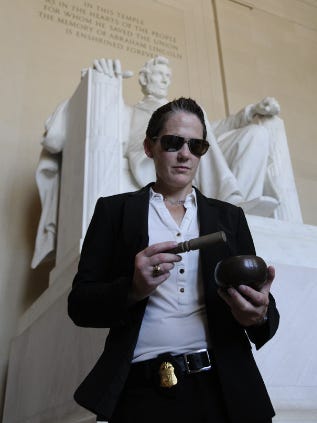
The Saturn–Neptune Dissolution: A 6,000-Year Shift
Astrology is the framework I’m using to make sense of why this moment feels charged. It gives me a way to place my experience inside a larger cycle as we move toward February 20.
On that day, Saturn and Neptune meet at 0 degrees Aries—the Alpha Point, the World Axis, one of the most publicly charged degrees of the zodiac. This is where private shifts stop staying private and spill into collective reality.
Saturn is structure, institutions, and authority—the bones of a system.
Neptune dissolves: certainty, illusion, and narratives that no longer hold.
When they meet, the question isn’t abstract: which structures are real, and which have been sustained by belief alone?
These two planets meet roughly every 36 years, but what makes this conjunction different is where it occurs. The last time Saturn and Neptune met at the Alpha Point was over 6,000 years ago.
In 1989, their conjunction fell in Capricorn, the sign of government and hierarchy. That cycle coincided with the fall of the Berlin Wall: a visible structure collapsing. What approaches now feels larger in magnitude. This marks the end of a world organized around external authority—and the uneasy birth of a world that must be tended rather than enforced.
The Reckoning: A Sunset on Ambition
My transition out of the FBI was, in many ways, a reckoning.
For years, I had a clear trajectory: become a Special Agent in Charge of a field office. I was “grooming” myself for the top. In 2020, at the start of the pandemic, I landed one of my dream jobs—as an Assistant Special Agent in Charge in Los Angeles, the office where I’d started my career in 2002. I was excited. I was ready to apply two decades of training.
But when I arrived in Long Beach, the story changed.
I found myself in a Craftsman house a mile from the beach. For the first time in my career, my nervous system began to reset. Years earlier, a supervisor warned me that if I didn’t slow down, my seven-day-a-week pace would burn out everyone around me. In the quiet of Long Beach, I finally began to listen. I had time to mentor. I had time to be a leader. I had time to take my first astrology class.
The final shift came during a 45-day assignment to the Diversity, Equity, and Inclusion (DEI) section in Washington, D.C. Walking into that unit felt like stepping onto the set of a show—Pose: vibrant, high-performing, full of brilliant trans and non-binary people. It was a pocket of the future living inside a relic of the past.
Then the system reacted.
An LGBTQ training video, commissioned under DEI, was released Bureau-wide. When a handful of people complained to the “7th Floor,” claiming the training was “gross” or violated their religion, the Bureau’s leadership pulled it. Just like that.
In a heartbeat, the system reached in and dissolved that pocket of the future, choosing rigidity over humanity. It was then I realized something was fundamentally broken. I looked at my chart and saw Saturn about to cross my Midheaven—the peak of my career.
As Saturn crossed that peak, the light on my dream of becoming SAC went out. I knew I was done. I didn’t want more promotions. I was finished with a system that would sacrifice its own people to appease a rigid, narrow authority.

The Crazy Parallel: Breaking the Narrative
That nauseous feeling I couldn’t shake wasn’t just personal. The longer I sat with it, the more I saw it as a signal—not just about my life, but about timing. The same larger moment reshaping my sense of identity and authority was pressing on the country itself.
For me, this meeting of Saturn and Neptune at the Alpha Point of Aries sits on top of my Sun—the core “I Am.” This conjunction is demanding a total rewrite of how my life force is expressed in public. I’m moving from an identity built on function—what I did for the State—to an identity built on being.
But for the United States, the geography is different. This conjunction at 0° Aries sits at the very end of the 3rd House in the U.S. chart—the place of briefings, intelligence, media, and the official story we tell others. That placement matters because it signals exhaustion, when the American narrative rests on false pretenses.
The narrative has reached its limit.
The briefing is over. There are no more words, no more reports, no more authoritative explanations that can adequately describe what’s underneath. At this threshold, the story gives out, and what waits on the other side is the 4th House—the basement of the chart, the place of roots, homeland, and what has been buried. The 4th House asks us to face ancestral pain and generational trauma. If there is a future, it will begin with forgiveness and deep repair.
The Falling Anchor: The Architecture of a Myth
My own history with the National narrative began in 1989, when the last Saturn–Neptune conjunction arrived. In June of that year, I reported to West Point and stepped directly into the heart of the structure at the same moment the world’s structures were beginning their own long shift, just months before the Berlin Wall fell.
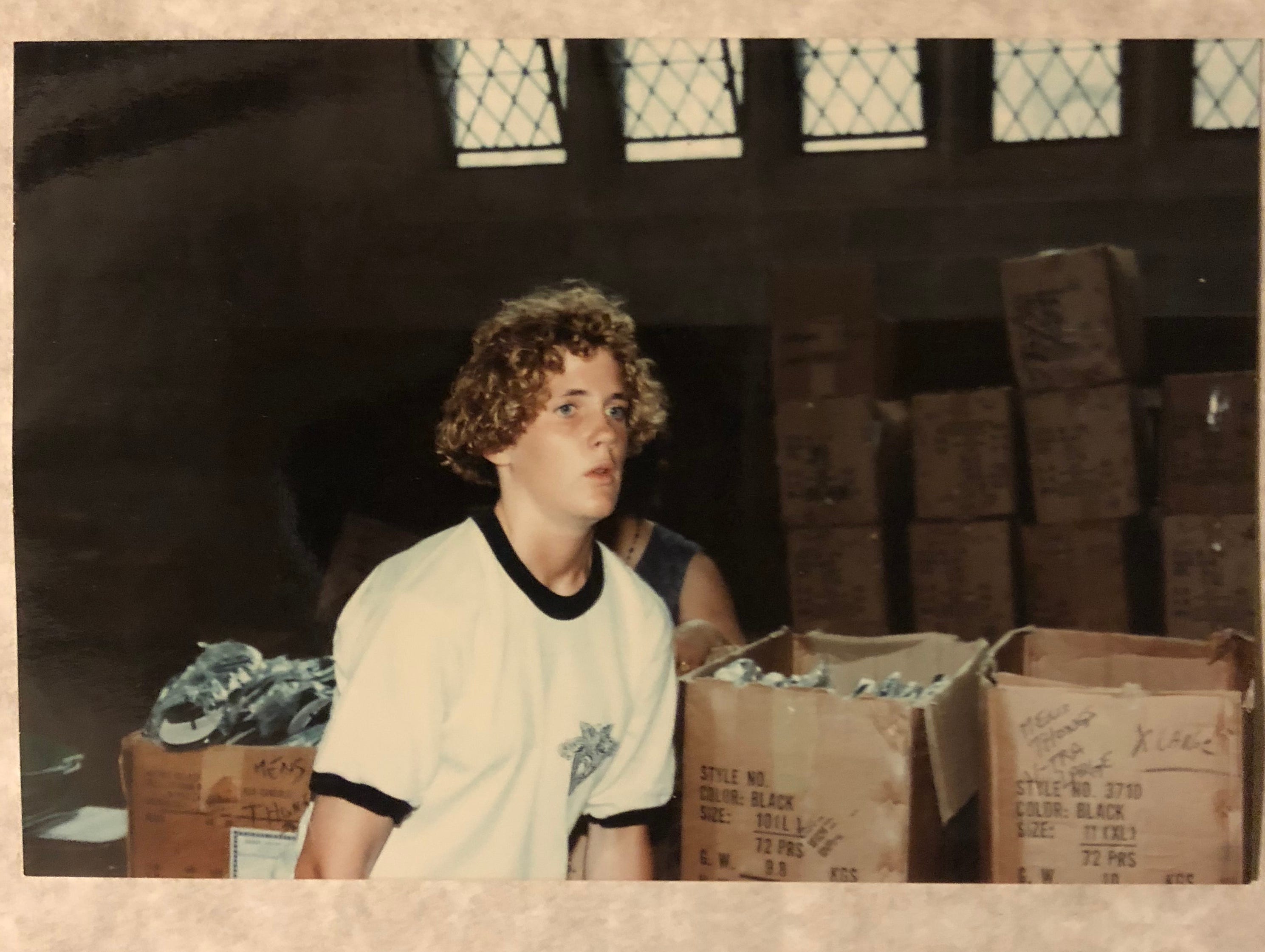
By 1999, I transitioned out of the Army and applied to the FBI, only to find myself caught in a hiring freeze that temporarily placed me in a manufacturing role. Then came the morning when an employee ran frantically onto the assembly floor and told me to get to the cafeteria. I walked into that room just as the second plane struck the World Trade Center, and in that instant I knew what we were witnessing. The world changed, the freeze thawed, and two months later I received my conditional letter of appointment. I reported to the FBI Academy at Quantico as part of the third class to graduate after 9/11, fully inside the myth we were building—not only the narrative of terrorism, but the promise that national security—counterintelligence and the expanding architecture of global defense—could hold the chaos at bay.
For years, that promise structured my life. It gave shape to ambition, discipline, sacrifice, and meaning. I believed in the coherence of the system because I was functioning inside it, contributing to it, and being rewarded by it.
That belief destabilized later, not from within the operational machinery itself, but from distance. When I began teaching a master’s-level course on Homeland Security, just as I retired, I encountered material on the systemic abuses of power under J. Edgar Hoover that stopped my breath. It wasn’t that I questioned the information—it was the realization that I had never been taught any of it at the Academy. I sat there in a cold shock. They had transmitted the myth, but not the shadow that made the myth possible.
Dismantling the Myth
The collision was unmistakable. Saturn had built the wall. Neptune was dissolving it. What had once been framed as structure and protection revealed itself as an institution increasingly unable to distinguish between preserving its authority and serving the people.
After the inauguration, that destabilization intensified. Executive orders, looming cuts to federal personnel, and the widening vulnerability of entire populations pressed down on a nervous system already registering that something foundational was giving way. I could feel myself trying to stabilize a collapse that no longer belonged to individual effort.
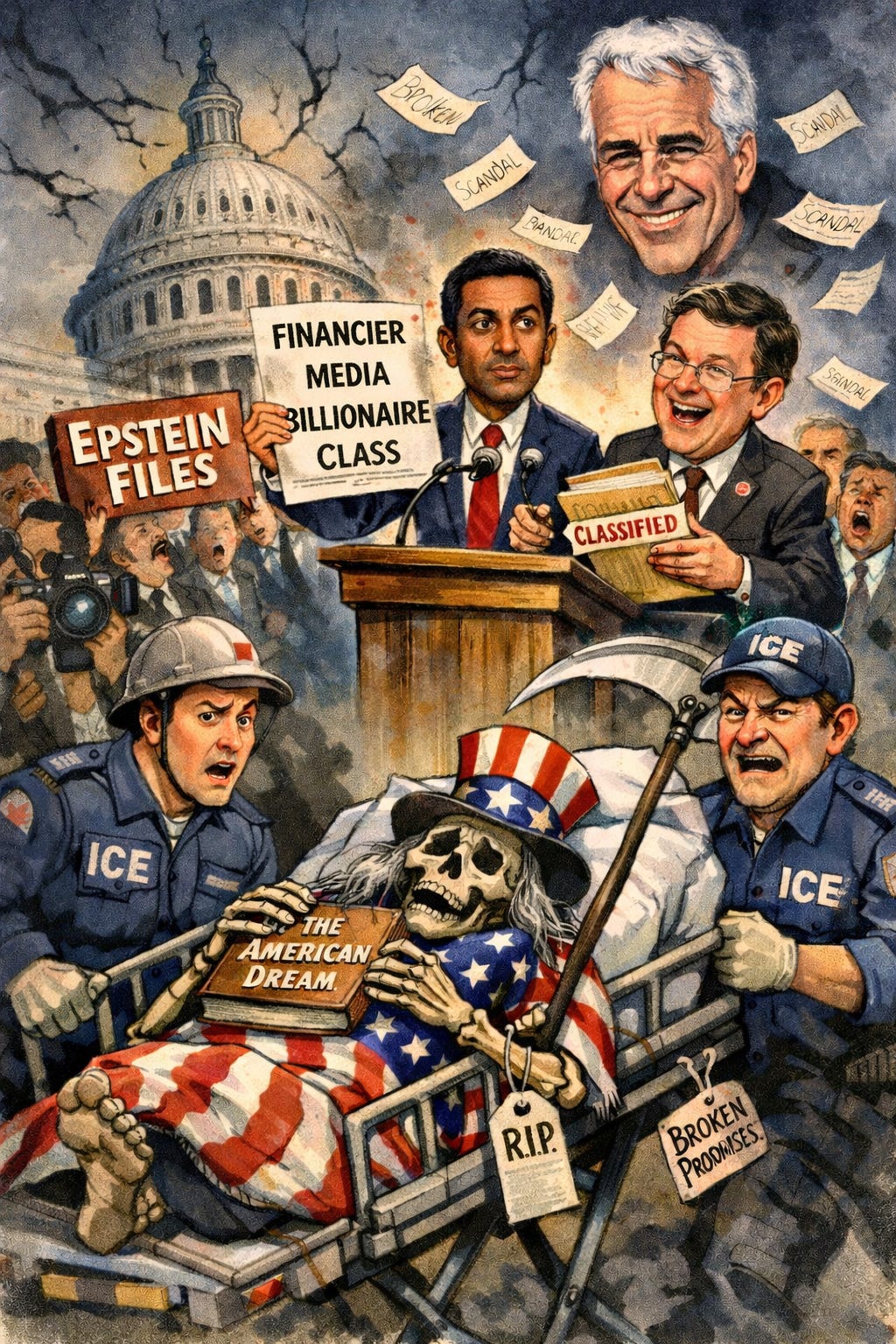
When I returned to the classroom this past semester to teach my course on Homeland Security, I no longer felt like a neutral transmitter of history. What we were tracing in the silence of the classroom was already visible in the sirens of LA and DC. My students and I discussed the unraveling of the American narrative in ways that were then academic, matching the official policy papers against the mounting reality of the streets. We were identifying the gaps in the script before they became the national headlines.
The secret we held in that classroom has now erupted onto the sidewalks. The very things we were scrutinizing in our briefings on Homeland Security—the fraying of the official story—are now what everyone is discussing in public view. The facade has been torn away. Across cities, the post-9/11 national security apparatus is being questioned in ways that would have seemed unthinkable for decades. Institutions once assumed to be permanent now find their authority negotiated, their funding uncertain, their coherence exposed.
The Department of Homeland Security was created as a direct response to 9/11. That moment reshaped the country’s entire security posture, and it was the catalyst that brought me into the Bureau. The loop closes here not as metaphor, but as lived history.
I entered a system built on the promise that security flowed from centralized authority and quiet obedience, and I am standing at a moment when that promise has visibly unraveled. The ground is moving beneath both the institutions and the people who served them. I still carry the nausea, especially now as we are constantly bombarded with the reality that the most powerful men in the world set up a system to traffic and sexually abuse children for decades. But, I recognize it now for what it is: the weight of a moral stain that has become my most reliable compass—a somatic reminder of what remains when we finally let go of the structures we once trusted that are doing harm.
Thresholds and Transitions
If this piece resonates, I work with individuals who are navigating similar thresholds—moments when identity, authority, or direction no longer align the way they once did. Astrology is one of the frameworks I use to help make sense of those transitions, alongside breathwork and somatic inquiry. You can find more about my work, or book a reading, through this link.
Kris is a great American, a leader, with a strong moral compass and I’m proud to call her my West Point sister.
Kris- Geez, your work is just so remarkable; I hope you know that. I just finished reading this and the clarity and courage of it is palpable. What you are articulating,so patiently, is something so many of us feel but lack the language to hold. I’m struck by how precisely your lived story overlays the Saturn–Neptune conjunction at the Aries point: not abstractly, but in the body, in vocation, in the disillusionment that turns out to be a form of moral intelligence. The way you describe authority dissolving, not in spectacle, but through quiet obedience losing its footing, feels profoundly accurate to this end-of-an-age moment. What I appreciate most is how granular you make the transition. You don’t romanticize the unraveling, you show what it costs to release an identity forged inside powerful institutions, and how that release is not failure but a necessary metabolization of truth. That feels especially important now, when so many are trying to bypass grief by clinging to structure. We are, as you say, at a threshold where the old briefing no longer works, and something more honest, more rooted, more tender, more accountable, has to be born. In the midst of so much chaos and non-fluency, I’m deeply grateful for a voice like yours that can translate this passage with both wisdom and humility. Blessings, Sheila Grace